


Team of National Engineering School of Sfax
Professor
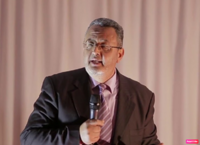
Adel M. Alimi graduated in Electrical Engineering in 1990 from ENIS (University of Sfax, Tunisia) and obtained a PhD (1995, from Ecole Polytechnique of Montreal, Canada) and then an HDR (2000, from ENIS, University of Sfax, Tunisia), both in Electrical & Computer Engineering. He is Full Professor in Electrical Engineering (since 2006) at the National Engineering School of Sfax (ENIS, University of Sfax, Tunisia). He is Distinguished Visiting Professor (since 2024) at the University of Johannesburg, South Africa (Faculty of Engineering & the Built Environment, Dpt. Electrical & Electronic Engineering Science) (Visiting Professor, 2021-2023); He is Founder and was Director (1997-2021) of the research REGIM Lab in intelligent Machines, University of Sfax. He was Director (2005-2011) of the National Engineering School of Sfax (ENIS, University of Sfax, Tunisia). He was Director of the Tunisia European Erasmus+ Office (2018-2020). He was Visiting Professor at the University of Applied Sciences of Weingarten, Germany (2002).
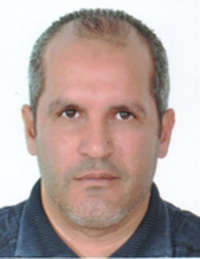
Ali Wali is a Professor in Signal and Image Processing at the Higher Institute of Computer Sciences and Multimedia of Sfax (ISIMS), University of Sfax, Tunisia, and serves as Director of Studies of this Institute. He received his Ph.D. in Computer Systems Engineering from the National School of Engineers of Sfax (ENIS) in 2013 and his HdR in Computer Systems Engineering from ENIS in 2017. He is a member of the Research Groups in Intelligent Machines (REGIM-Lab). His research interests include computer vision, image and video analysis, video event detection, pattern recognition, artificial intelligence, and multimedia systems, with applications in healthcare technologies and digital transformation. He has authored and co-authored several scientific publications in international journals and conferences, participates in national and international research and academic collaboration projects, supervises graduate students in engineering and master programs, and is actively involved in curriculum development, academic governance, and digitalization initiatives at ISIMS. He is a Senior Member of IEEE.
Dr
Islem Jarraya was born in Sfax, Tunisia, in 1986. She received the Four-year University Degree in computer science and multimedia in 2009 and the master degree in Computer Science and Multimedia in 2014 at the Multimedia, InfoRmation systems and Advanced Computing Laboratory (MIRACL-Lab) from the higher institute of computer science and multimedia of Sfax, Tunisia. She has been pursuing the PhD. degree on Computing System Engineering with the Research Group on Intelligent Machines (ReGIM-Lab) at ENIS since 2015. She focuses her research on applying intelligent methods—deep neural networks, feature extraction, and recognition algorithms—to deep machine learning, computer vision, face image processing, and intelligent pattern recognition, and on developing frugal deep learning and computer vision systems for clinical decision support and biometric authentication. She has been an active IEEE member for 7 years (from 2015 to 2021).
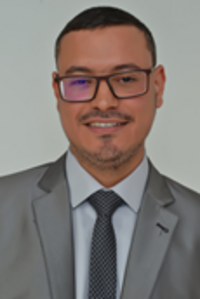
THAMEUR DHIEB (Member, IEEE) was born in Sfax, Tunisia, in 1985. He is currently an Assistant Professor at the Higher Institute of Business Administration of Gafsa. He obtained the M.S. degree in Computer Science from FSEGS, Tunisia in 2012 and the Ph.D. degree in computer science from ISITCOM in 2021, Tunisia. His research interests include handwriting and hand movement analysis, writer identification, signature verification and neurological disease detection. He is a reviewer of the IEEE Access, Neurocomputing, Expert Systems with Applications, Cognitive Computation and Egyptian Informatics Journal. He is affiliated with Research Groups in Intelligent Machines – REGIM Lab, Enis, University of Sfax, Tunisia.
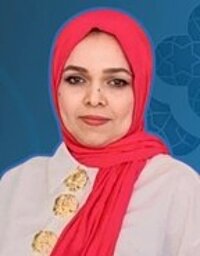
Besma Rebhi was born in Sidi Bouzid, Tunisia, in 1985. She received the Ph.D. degree in Computer Systems Engineering from the National Engineering School of Sfax (ENIS), Tunisia, in 2022. She is currently a contractual assistant in Computer Science at the Higher Institute of Technological Studies of Sidi Bouzid (ISET Sidi Bouzid), Tunisia. She is a member of the Research Group on Intelligent Machines (ReGIM), where her research focuses on the application of artificial intelligence techniques, including neural networks and deep learning models. Her main research interests include handwriting analysis, pattern recognition, and deep learning–based approaches for medical data analysis and intelligent decision-support systems. She has been an active IEEE member for 10 years and is involved in academic and research activities in the fields of artificial intelligence and intelligent systems.
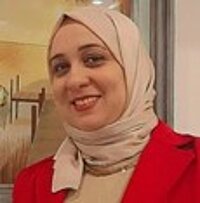
Onsa Lazzez was born on October 26, 1990, in Sfax, Tunisia. She holds a doctorate in computer systems engineering and currently serves as an Assistant Professor at ENET'COM. She actively contributes to research as a member of the REGIM Lab in Sfax, specializing in innovative fields such as deep learning, natural language processing (NLP), and large language models (LLMs). Her academic and professional journey is driven by a passion for pushing the boundaries of artificial intelligence and delivering advanced solutions to contemporary technological challenges.

Marwa Jabberi was born on May 25, 1990, in Tunisia. She holds a Ph.D. in Computer Science from the Institut Supérieur d'Informatique et des Technologies de Communication de Sousse (ISITCOM), specializing in computer vision and artificial intelligence. She is currently a contractual doctor and lecturer at ISITCOM and an active member of the ReGIM-Lab (Research Groups in Intelligent Machines), University of Sfax. Her research focuses on 3D face analysis and recognition, deep learning for visual data modeling, 3D reconstruction, and convolutional neural networks, with particular emphasis on robustness to pose variation and spoofing attacks. She also works on AI-driven medical imaging applications, notably in next-generation maxillofacial surgery integrating intelligent 3D analysis techniques. In parallel with her research activities, she is deeply involved in university teaching in Artificial Intelligence, Big Data, Python programming, and distributed systems, contributing to the training of engineers and master’s students in advanced AI technologies. Her academic journey reflects a strong commitment to advancing intelligent systems and applying artificial intelligence to real-world scientific and medical challenges.
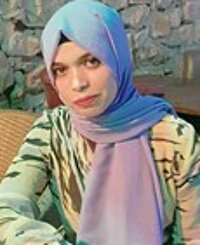
Hajer Ghodhbani received the Master’s degree in Computer Science from the Higher National Engineering School of Tunis (ENSIT), Tunisia, in 2016, and the Ph.D. degree in Signal and Image Processing from the National Engineering School of Sfax (ENIS), Tunisia, in 2023. She is a member of the Research Groups in Intelligent Machines (REGIM Laboratory), ENIS, University of Sfax, Tunisia. She is currently affiliated with the Department of Electrical and Electronic Engineering Science at the University of Johannesburg, South Africa. Her research interests focus on the development of deep intelligent systems using advanced technologies in artificial intelligence, machine learning, and image processing.
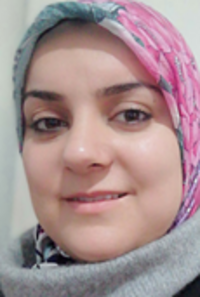
Omaya BELLAAJ was born on FEBRUARY 23, 1987, in Sfax, Tunisia. She holds a Ph.D. in Electrical Engineering and currently she works as contract teacher at ENET'Com. She is also an active member of the ESSE Laboratory, where she contributes to advanced research activities. Her research focuses on the design of robust and reliable analog circuits in advanced CMOS technologies. A central aspect of her work involves optimizing circuit performance while addressing the challenges posed by variability in nanometer-scale CMOS processes. More recently, she has expanded her research to incorporate artificial intelligence and machine learning techniques, leveraging these approaches to enhance both circuit design methodologies and performance evaluation strategies.
Amira Hamdi received a PhD in Computer Systems Engineering in 2017 within the framework of a cooperation between the National Engineering School of Sfax (University of Sfax, Tunisia) and the Polytech Tours (University of Tours, France). She is currently an Assistant professor at National Engineering School of Gafsa (University of Gafsa, Tunisia). She is a member of REGIM-Lab, the Research Groups on Intelligent Machines, (LR11ES48), ENIS, University of Sfax, Tunisia. She has authored several papers in international journals and conference proceedings. Her research interests cover a broad range of topics, including Artificial Intelligence, Swarm Intelligence, Fractal Theory and Quantum Computing. Her research activities focus particularly on Ant Colony Algorithms and their applications to data clustering problems.
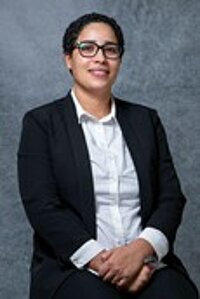
Malak BEN ATTIA was born on July 17, 1989, in Tunisia. She holds a Ph.D. in Mechanical Engineering from the École Nationale d'Ingénieurs de Tunis, with a specialization in tribology and interface mechanics. She is currently a lecturer at École Polytech Intl (Lac 1) and an active member of the ReGIM-Lab (Research Groups in Intelligent Machines) at the Université de Sfax. Her research primarily focuses on optimizing engine oil viscosity to reduce CO₂ emissions, as well as on surface roughness optimization by integrating artificial intelligence approaches to enhance heat transfer in industrial applications. She is also interested in the conversion of internal combustion vehicles into fully electric vehicles. In addition, she conducts research on artificial intelligence applications in the healthcare sector, particularly in next-generation maxillofacial surgery. Her work aims to develop predictive models based on machine learning and biomechanical data analysis to anticipate bone behavior after surgical intervention, integrating advanced mechanical numerical simulations. By combining finite element modeling, characterization of bone mechanical properties, and AI algorithms, she seeks to develop intelligent decision-support tools capable of simulating different surgical scenarios, assessing post-operative stability, and optimizing personalized surgical planning.

Takwa Omrani was born on December, 20, 1986 in Tozeur, Tunisia. She graduated in Applied Computer Science for Management in 2009 from the Higher Institute of Management of Gabes (ISGG). She obtained a Master’s degree in Computer Science in 2012 from Higher Institute of Computer Science and Multimedia of Gabes (ISIMG). She received her PhD in Electrical Engineering in 2019 from the National Engineering School of Gabes(ENIG). She is a member of the Research Group on Intelligent Machines (ReGIM), ENIS, University of Sfax, Her research interests focus on the application of Machine Learning and Deep Learning approaches for Intrusion Detection Systems and Cybersecurity. She is currently a Technologist in Computer Science at the ISET Tozeur.
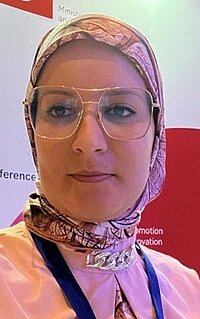
Yosr Ghozzi obtained her Research Master’s degree in Computer Science and her PhD in Computer Systems Engineering, both from the National School of Engineers of Sfax (ENIS, University of Sfax, Tunisia). She is currently an Assistant Professor at the Higher Institute of Computer Science and Multimedia of Gabes (ISIMG). Her research interests include content-based image retrieval, deep learning, and interval type-2 fuzzy systems, with a significant focus on intelligent systems applied to healthcare and medical diagnosis. She conducts her research with the Research Groups in Intelligent Machines (REGIM-Lab) at ENIS, University of Sfax, Tunisia.
Khalil Boukthir received his Engineering degree in Computer Engineering from the National Engineering School of Sfax (ENIS, University of Sfax, Tunisia), and obtained his PhD in Computer Science.
He is currently a Computer Engineer at the National Engineering School of Sfax (ENIS), University of Sfax, Tunisia. His research interests include Artificial Intelligence, Machine Learning, Deep Learning, Reinforcement Learning, Computer Vision, and Intelligent Systems, with a particular focus on applied AI solutions in smart agriculture, medical image analysis, and intelligent decision-making systems. Dr. Boukthir has published several scientific papers in international peer-reviewed journals and conferences, including Q1 journals. He is actively involved in national and international research projects and collaborations, particularly in the areas of Intelligent Irrigation Systems, Federated Learning, and Reinforcement Learning. In addition to his research activities, he teaches undergraduate and graduate courses in programming, artificial intelligence, and computer systems, and supervises engineering and research students. He also contributes to digital transformation and e-administration initiatives within the university.

Sonia MAALEJ was born in Sfax, Tunisia, in 1986. She received the Engineering degree in Electrical Engineering (Automatic Control and Industrial Computing) from the National School of Engineers of Sfax (ENIS), Tunisia, in 2010. In 2011, she obtained two Master’s degrees in Electrical Engineering: one in Automatic Control and Industrial Computing from the National School of Engineers of Sfax, Tunisia, and another in Systems, Autonomous Machines, and Fieldbus Networks from the École Centrale de Lille, France. She received the Ph.D. degree in Electrical Engineering from the University of Lille 1, France, in 2014. Since 2025, she has been an Assistant Professor with the Higher Institute of Applied Sciences and Technology (ISSAT), Kairouan, Tunisia, in the Department of Electrical Engineering. Since 2025, she has also been serving as an Expert Evaluator with the Tunisian Evaluation and Accreditation Agency (ATEA), Tunisia. Her research interests include artificial intelligence, reinforcement learning, the Internet of Things, robust control of nonlinear systems with variable time parameters, and model-free control.