


Team of University of Lille
Professor
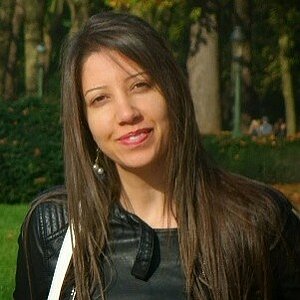
Zaineb GARCIA (THUNDER Coordinator) is a Professor at University of Lille, a researcher at Inria Lille (Delegation), a member of the Operational Research, Knowledge And Data (ORKAD) group at the CRIStAL laboratory, and a member of the Institute for Translational Research in Inflammation (Inifinite). She earned her HDR (qualification for supervising research) from the University of Paris-Saclay, France. Her research interests span various aspects of Artificial Intelligence, including Machine Learning, Evolutionary Algorithms, Artificial Immune Systems, Generative Artificial Intelligence, approximated reasoning, granular computation, and privacy preservation. She focuses on real-world applications, particularly in the medical field and cyber-security. Her research is funded by European Union’s research and innovation programs, national grants, multi-partner projects, and bilateral research collaboration programs. She has received numerous awards, including the Marie Skłodowska Curie Individual European Fellowship (MSCA-IF), the Young Researcher First Price (IEEE EHB’2013), the ACM-W Award, and the Best Reviewer Award (iCDEc 2018). She also acts as a Marie Sklodowska Curie Ambassador, selected as a Female Scientist Role Model, and selected to be among the Heidelberg-Laureate-Forum (HLF'2017) most qualified young researchers, and among the 30 MSC talented researchers to communicate her research at the Falling Walls Labs 2018 organized by the European Commission (EC).
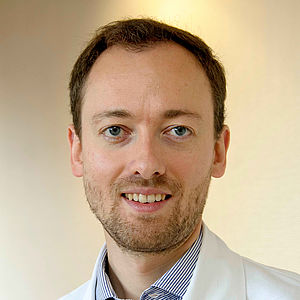
Vincent SOBANSKI is a Professor in Internal Medicine at the University of Lille and CHU Lille; my research work aims to better characterize the clinical heterogeneity of systemic autoimmune diseases and to understand the role of autoantibodies. As clinical physicians, we are constantly looking for the best tools to diagnose, search for complications or predict prognosis in order to decide on therapeutic management. We already use patient stratification methods for the diseases we are in charge of; new technological tools provide new avenues for research. I have been strongly involved in this theme in the hospital and university community. My academic work is focused on helping to diagnose and stratify patients through new technologies and an integrated approach, building on and developing my own research on rare diseases (autoimmune and fibrotic pathologies), but with a strong commitment to disseminate and use these skills for the entire community.
Post-doc

Adán JOSÉ-GARCÍA is a Research Fellow in Digital Health at the Department of Computer Science, CRIStAL Lab, University of Lille, France. This is a collaborative project with the Lille University Hospital and INCLUDE. His current project involves developing and applying unsupervised machine learning techniques to classify patients with systemic autoimmune diseases. Before joining the University of Lille, he was a Research Fellow in Machine Learning at the Department of Computer Science, Institute of Data Science and Artificial Intelligence, University of Exeter, United Kingdom (UK). Before this, he was a Postdoctoral Researcher with the Decision and Cognitive Sciences Research Centre, University of Manchester, UK. He hold M.Sc. and Ph.D. degrees in Computer Science from the Center for Research and Advanced Studies of the National Polytechnic Institute, Cinvestav-IPN, Mexico. His research consists in creating clustering approaches (e.g., multi-view clustering, biclustering) and their applications to different research fields such as digital healthcare, labour market and network analysis. His research currently focuses on developing integrative cluster analysis approaches to address healthcare-related data problems and help to understand better disease complications and treatment goals.
PhD students

Julien SOTTIAUX, after several years as a consultant in healthcare industries, he transitioned into bioinformatics in 2023 and completed a Master’s degree in Systems Biology, specializing in omics data generation and analysis. In 2026, he will started a PhD project in the Endomic team, working on multi-omics data integration to better characterize systemic sclerosis (SSc). His research focuses on developing data integration frameworks and using unsupervised machine learning to uncover molecular signatures, regulatory modules and hidden endotypes from heterogeneous omics datasets (e.g. genomics, transcriptomics, proteomics and metabolomics). The aim of this project is to improve our understanding of SSc heterogeneity and support subtype prediction and precision medicine in systemic autoimmune diseases.
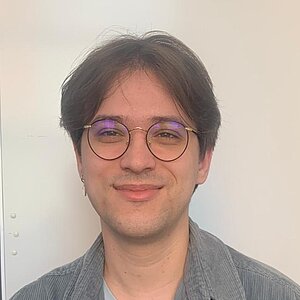
Clément CHAUVET is a PhD Student in Data Science, University of Lille & KU Leuven. After studying applied math and doing a master‘s in AI and data science in Université PSL in Paris, he is currently doing a joint PhD between Université de Lille and KU Leuven on the topic of computer vision for antinuclear antibody microscopy slides. His research interests include (but are not limited to) multiple instance learning, (multi-)omics analyses, transformers, large language models, and their application to healthcare.
Kilian DEBRAUX is a PhD Student in Data Science, University of Lille. He began as a PhD student in Endomic in October 2024. He aims to study patients longitudinal data to help unveil hidden endotypes in systemic sclerosis. Unsupervised machine learning can be a great tool to achieve such a goal, so as a computer science PhD student he will develop algorithms and AI models like triclustering and statistical analysis. With a master in AI and data analysis, he analyzes patient’s data and discovers hidden homogeneous clusters or patterns in order to help building a prognosis model for systemic sclerosis
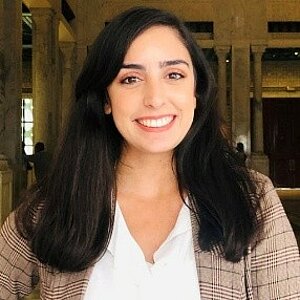
Rahma HELLALI holds a Master’s degree in Computer Science in intelligent decision-support systems, where she developed machine learning solutions for healthcare applications. She subsequently gained strong industry experience as a machine learning engineer and data scientist, working on applied AI projects including NLP, credit scoring, predictive modeling, and large-scale data analysis in industrial and financial contexts. She is currently a PhD candidate in Computer Science at Université Paris-Saclay, within the DAVID laboratory, where her research focuses on machine learning methods for multi-omics data integration and personalized treatment in sepsis. Her work centers on advanced feature selection and dimensionality reduction using multi-objective and multi-agent interactive deep reinforcement learning, with applications to transcriptomic, metabolomic, and clinical data. Her research aims to improve the prediction of corticosteroid sensitivity and mortality while identifying clinically relevant biomarkers, contributing to data-driven precision medicine.
Malek ADOUANI, between 2019 and 2021), built a foundation in business computing, gaining knowledge in data structures, algorithms, and information systems, which later supported her transition in 2022 toward artificial intelligence. She pursued a Master’s degree, completed in 2024, focusing on applying deep learning to healthcare data. Her work centers on understanding and augmenting clinical datasets, which are often limited in size, biased, heterogeneous, and subject to strict privacy constraints. Her research focuses on the design of generative models, specifically Generative Adversarial Networks (GANs), to generate synthetic medical data that can support analysis and experimentation when access to real patient data is restricted. A key application domain of her work is sepsis, used as a real-world clinical case study to evaluate the reliability, robustness, and clinical relevance of the generated data. In 2025, she began her PhD, building on this work. Within this context, she studies how to preserve the statistical and structural properties of clinical data while reducing bias, improving fairness across patient subgroups, and protecting sensitive information through well-established privacy-preserving frameworks. Beyond data fidelity, her objective is to produce trustworthy and knowledge-consistent synthetic data, capable of supporting meaningful downstream analysis rather than serving as purely artificial samples. Her interests lie at the intersection of machine learning, healthcare data science, and responsible AI, with an emphasis on practical, clinically informed models.