


Team of University of Versailles Saint-Quentin-en-Yvelines
Professor
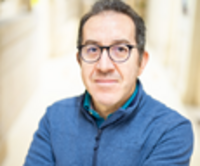
Mustapha Lebbah is currently a Full Professor at Versailles University (UVSQ), part of Paris-Saclay University, and a member of the DAVID Lab (Data and Algorithms for a Smart and Sustainable City). He is also an associate member of LIPN UNR CNRS 7030. His research interests focus primarily on machine learning, including unsupervised learning, mixture models, clustering, scalable machine learning, big data, and data science. From 2005 to 2022, he served as an Associate Professor at Sorbonne Paris North University (USPN). In 2003, after three years working in R&D at Renault, he obtained his PhD in Computer Science from Versailles University. He received his accreditation to lead research (Habilitation à Diriger des Recherches - HDR) in Computer Science from USPN in 2012. Mustapha Lebbah was Secretary of the French Classification Society from 2012 to 2021. Since January 2023, he has been the President of the EGC Association (International French-speaking Data Mining Society).

Jérémie Cabessa is currently a Professor in Computer Science at Université de Versailles Saint-Quentin-en-Yvelines (UVSQ), part of Paris-Saclay University, and a member of the DAVID Lab (Data and Algorithms for a Smart and Sustainable City). He spent three years in the industry as a senior and principal data scientist. He is the head of the Pole C of the Doctoral School STIC of University Paris-Saclay. His current research interests focus on neural networks theory, neural computation, bio-inspired neural networks, and deep learning, in particular transformer and diffusion models applied to chemistry.
Associate Professor
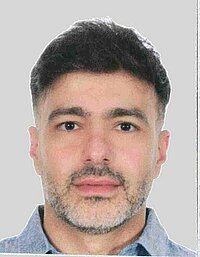
Yehia TAHER is an Associate Professor of Computer Science at the University of Paris-Saclay (Versailles, France) and a Research Scientist at the laboratory “Data and Algorithms for a Smart and Sustainable City.” His research focuses on AI-driven workflow and service systems, large-scale data architectures, and intelligent distributed platforms. He has authored over 80 peer-reviewed publications in Service-Oriented Architecture, Cloud Computing, Data Science, and Artificial Intelligence. He has supervised more than 14 PhD theses and actively contributes to advanced teaching and international academic collaboration in AI and Big Data.
Ph.D.
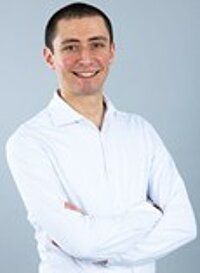
Reda Khoufache is a Ph.D. and a researcher at Université Paris-Saclay, affiliated with the Probability and Statistics team at the Laboratory of Mathematics of Versailles, and an associate member of the A3 team at the LIPN Computer Science Laboratory. He received his Master’s degree in Mathematics and Applications, specializing in Statistics, from Sorbonne University in 2021, and his Ph.D. in 2025. His research focuses on statistical and machine learning theory, with an emphasis on generative probabilistic models and Bayesian nonparametric methods. In particular, he works on mixture models, Dirichlet Process Mixture Models (DPMMs), and Nonparametric Latent Block Models (NPLBMs), as well as their integration with deep neural networks.

Tom Devynck is a PhD Student at Versailles University (UVSQ), part of Paris-Saclay University. He received his Master’s degree in Mathematics and Applications, specializing in Econometrics and Statistics, from Toulouse School of Economics in 2025. For his PhD, he is under the supervision of Mustapha Lebaah, Full Professor at UVSQ, and Nadjib Lazaar, Full Professor at Paris-Saclay University. His thesis title is “Deep Hypergraph Neural Networks based on Game Theory”.

Liza Chetouani is a PhD student at the Laboratoire d’Informatique de Paris Nord (LIPN), affiliated with the CNRS. She graduated with a Master’s degree in Data Science from Paris-Saclay University in 2025 and started her PhD in October 2025 under the supervision of Hanane Azzag and Mustapha Lebbah. Her doctoral research is funded by the CNRS through its MITI interdisciplinary programs. Her research focuses on Reinforcement Learning with Human Feedback (RLHF) in healthcare, particularly on generating synthetic patient profiles. She addresses the challenges of limited and restricted medical data, which hinder the development and evaluation of reliable machine learning models. Within this context, her work aims to design advanced generative models capable of producing realistic and clinically coherent synthetic patients. The medical data considered in her research are multimodal, covering different types of information (clinical and multi-omics data) and various formats (structured/tabular data, clinical text, and medical images). A central application domain of her work is sepsis, a severe and life-threatening condition characterized by a dysregulated host response to infection. Sepsis remains associated with a high mortality rate worldwide and represents a major clinical challenge due to its heterogeneity, rapid progression, and complexity. It therefore provides a particularly relevant and demanding real-world case study to evaluate the reliability, robustness, and clinical consistency of the generated synthetic patient profiles.